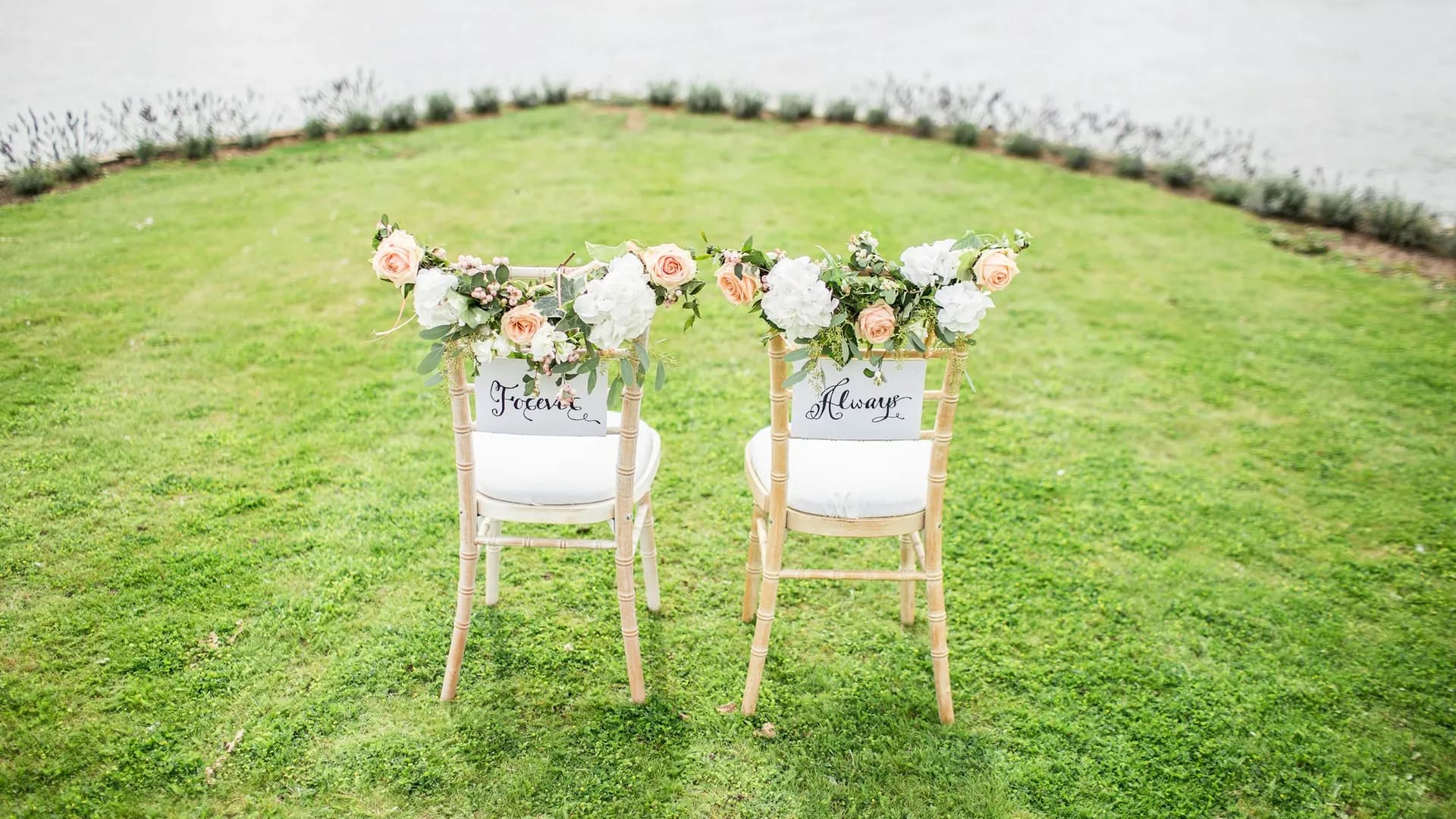
Flowers are the fastest way to make a Yarra Valley wedding look finished, and the fastest way to make it look anxious if they are fighting the site. Vines, gums, garden roses, herbs and autumn colour already exist. A florist’s job is to decide what should be added, what should be left, and what will still look alive at speeches.
Confirm any studio yourself. This page does not list florists.
Describe the site, not only the colours
Send:
- Ceremony and reception locations, including the indoor backup
- Photos of the actual rooms and the ground underfoot
- Whether an arch, pots or pew ends must be installed on grass
- How far flowers travel from studio to site, and from ceremony to dinner
- Guest scale and table shape (long feast versus rounds changes everything)
- Any scent sensitivities and any “no petals on this lawn” venue rule
Then talk colour. Champagne, ivory, blush and vineyard green already sit in this site’s visual language; they are not a prescription for your bouquet. If you want a sharp contrast, say why, so the florist can tell you whether the room can take it.
Mechanics are part of romance
Wind along vine rows will lift top-heavy structures. Heat will drop heads. Irrigation may soak a lawn at the wrong hour. Ask:
- What mechanics are allowed (stakes, bases, water sources)
- Who installs, when, and who de-installs
- Whether candles and flowers share a table safely
- How personal flowers are stored before the ceremony — a warm car is not a cooler
If the venue limits open flames or petals, believe the venue. Design around the rule.
Personal flowers and photography
Bouquets, buttonholes and flower crowns need a timeline that matches getting-ready rooms. A bouquet left in a bathroom while portraits happen on a ridge will look like that decision. Give the photographer and the florist the same call time.
For buttonholes, name who receives them. A list on the day is how someone important is missed.
Season without folklore
This guide will not invent a “best flower month” ranking. It will say the obvious: local gardens and vineyards change. A winter ceremony may want more structure and indoor-friendly arrangements. A January lawn may want water, shade and varieties that do not collapse by 3pm. Ask for a seasonal suggestion for your date, then lock it.
When flowers are sketched, check hire so vessels, candlesticks and table sizes are one conversation, not three invoices that disagree.
Ceremony structures that still work indoors
If you build an arch that can only stand in soil, you have designed a single-weather object. Ask for a design that can come inside, or for a simpler indoor version that uses the same flowers. Guests should not feel they attended a different wedding because a front arrived.
Aisle flowers should leave a path wide enough for people who do not walk like editorial models. Grandparents, wheels and a dress train all need the same metre.
Sustainability without a slogan
Seasonal and local material usually travels less and looks more at home among vines. That is a practical observation, not a certification. If you want to avoid floral foam, say so and accept the mechanical consequences. If you want to donate or reuse arrangements the next day, name the person who will move them while you are eating leftovers.
Do not claim a “zero waste wedding” on the basis of a single foam-free bouquet. Do the smaller honest thing: say what you actually care about.
The morning-of kit
A florist who knows rural sites will bring water, extra ties, and a way to revive personal flowers after a drive. You should still give them a table that is not in full sun and a contact who is not also in a makeup chair. If the getting-ready cottage is a long way from the lawn, personal flowers may need two deliveries. Ask. Do not assume a single drop solves both rooms.
Flowers are living hire. Treat them with the same respect you treat a cake in heat, and they will still look like a decision at speeches rather than a memory of the morning.
If you are unsure where to spend, spend on personal flowers that will be held and photographed, and on one ceremony piece that can move. Leave the vines their job. A valley wedding already paid for a landscape; the florist’s work is to meet it, not to replace it.
Ask, finally, who owns the flowers after midnight. A beautiful installation that nobody is allowed to move becomes the venue’s problem or the couple’s Monday. Name the pack-down. That sentence is part of the plan, the same as colour. Then stop adding buckets. The landscape already did the rest.